Afro Hair Transplants in the UK

Afro-textured hair can absolutely be transplanted, but it asks more of the surgeon: the curl you see above the skin continues beneath it, and extraction, graft handling and hairline design all have to respect that. The clinics in London and Manchester carry out afro-textured FUE work routinely, with surgeons who have specific expertise in Afro-Caribbean hair and hairlines, and the price follows the same published list as every transplant we offer, from £2,499.
Last reviewed on 31 August 2026. We review our treatment guides every six months to keep them accurate.
Can You Have a Hair Transplant With Afro Hair?
Yes. The question gets asked because the doubt is real: some UK clinics decline patients with afro-textured hair, or quietly refer them elsewhere, because the extraction genuinely is more demanding. That is a reason to choose your surgeon carefully, not a reason to rule out the surgery.
Nothing about afro-textured hair prevents a transplant. The follicles are healthy, the donor area works the same way, and the transplanted hair grows with its natural curl, because the curl comes from the follicle and moves with it. Afro hair implants, as the procedure is sometimes searched for, means exactly this surgery: your own follicles, moved by FUE.
Why Afro-Textured Hair Is Different to Transplant
Under the skin, an afro-textured follicle is curved, following the same spiral as the hair it produces. A standard straight punch driven quickly along that curve can slice through the follicle instead of freeing it, a mistake called transection, which wastes grafts. Extracting afro-textured hair safely means wider punches, adjusted angles and a slower pace, and it rewards a surgeon who does this work regularly rather than occasionally.
The same curl becomes an advantage at the surface. Each curled hair shadows and covers more scalp than a straight one, so afro-textured hair reads as full at lower densities: fewer grafts produce the same visual coverage. A plan that would need a bigger session in straight hair is often comfortably achievable in one day of afro-textured work.
Aspect | Straighter Hair | Afro-Textured Hair |
|---|---|---|
Grafts per surgical day | Up to 3,500 | 2,000 to 2,500 |
The follicle | Sits straight beneath the skin | Curves beneath the skin |
Extraction | Standard FUE punch | Wider punch, slower and more careful work |
Coverage per graft | More grafts for the same look | The curl covers more, so fewer grafts read full |
Price list | £2,499 to £4,899 by graft number | The same list, no hair-type premium |
How Many Grafts, and the Sessions
The careful pace has one practical consequence: a surgical day yields around 2,000 to 2,500 grafts of afro-textured hair, against up to 3,500 for straighter types. Because coverage per graft runs the other way, most afro-textured plans still fit inside a single day.
Where a plan does need more than the daily ceiling, it is scheduled across separate days, and the full plan and its price are confirmed with you at consultation before anything is booked.
Afro Hair Transplant Costs in the UK
An afro hair transplant costs between £2,499 and £4,899 at My Hair UK. The price is set by the graft number, not by hair type: there is no premium for afro-textured work, and the figure is fixed before surgery. It includes the procedure under local anaesthetic, your post-operative medication and aftercare kit, and in-person follow-ups.
The full price list by graft number, and what decides how many you need, is on our hair transplant cost guide. The method itself is FUE, explained step by step on our FUE hair transplant page.
Hairline Design for Afro Hair
Afro-textured hairlines sit differently from Caucasian or Asian ones, and copying a design across gets it wrong. They are typically lower, flatter and straighter, with a squarer corner at the temples, and the edges carry visual weight in many styles, so how the frontline is built matters more than raw graft counts.
The design work is where experience with Afro-Caribbean hair shows. The angle of each incision has to follow the curl rather than fight it, single grafts still lead the line, and the finished edge has to hold up against the styles you actually wear, from a low fade to a full afro.
Hair Loss in Afro-Textured Hair
The most common cause we see in afro-textured hair, especially in women, is traction alopecia: years of tight braids, weaves, extensions and relaxers pulling at the same follicles until the hairline and temples thin and recede. Caught early, it can recover on its own once the tension stops. Once the follicles are gone, they do not return, and a transplant is the repair, provided the loss is stable and the styling habits that caused it have changed. Our traction alopecia guide covers the stages and the warning signs in detail, and our afro hair loss guide surveys the full range of causes in afro-textured hair.
Two other patterns matter. Male pattern baldness affects Black men exactly as it does everyone else, and transplants for it work the same way. Scarring alopecias, including CCCA, which mostly affects women of African and Caribbean heritage, are different: they need a dermatologist to confirm the condition is inactive before surgery is even discussed, because grafts placed into active scarring disease fail. If your loss came with itching, tenderness or smooth shiny patches, get the diagnosis first; our CCCA guide explains the condition, its symptoms and its treatment.
Keloids and Skin Healing
Some patients of African and Caribbean heritage form keloid or raised scars more readily, and an honest clinic screens for it rather than discovering it afterwards. At consultation you will be asked about your healing history, previous piercings, cuts and surgical scars included. FUE leaves dot marks well under a millimetre, the gentlest surgical footprint available, but if you are prone to keloids the general surgical advice is against a transplant, firmest where one has formed on your head before, and a small test incision under local anaesthetic can be offered to show how your skin heals first. Our keloid scarring guide covers the risk, the screening and the honest answer in full.
Clinics in London & Manchester
Afro-textured procedures run at the clinics in Harrow, north-west London, and in central Manchester. Patients travel from across the country for this work, with Birmingham, Newcastle, Cardiff and Bristol common starting points, because clinics with genuine afro-textured experience are scarce.
Consultations are free, held with the surgeon who would carry out your procedure, and cover your donor area, the curl-adjusted graft plan and your exact price. Book a free consultation at either city, or send a few photographs and we will give you an honest view of what a transplant can achieve.
What People Say About Us
Read our independent My Hair UK Reviews on Reviews.io
Frequently Asked Questions
Q: Can afro hair be transplanted?
A: Yes. FUE works well on afro-textured hair when the surgeon adapts the technique: the follicle is curved beneath the skin, so it needs wider punches, adjusted angles and a slower pace. The transplanted hair keeps its natural curl, because the curl comes from the follicle itself.
Q: How much does an afro hair transplant cost in the UK?
A: Between £2,499 and £4,899 at My Hair UK, on the same published list as every hair type: the price is set by graft numbers, with no premium for afro-textured work. The curl covers more scalp per graft, so many afro-textured plans need fewer grafts than the equivalent look in straight hair.
Q: Why do some clinics not offer transplants for afro hair?
A: Because the curved follicle makes extraction harder, and transection, cutting through the follicle during extraction, wastes grafts in inexperienced hands. Declining the work is more honest than doing it badly, but with surgeons who handle afro-textured hair regularly it is routine surgery.
Q: How many grafts does an afro hair transplant need?
A: Usually fewer than a straight-hair plan for the same visual result, because curled hair covers more scalp per graft. A surgical day yields around 2,000 to 2,500 grafts of afro-textured hair, and most plans fit within a single day.
Q: Can a hair transplant fix traction alopecia?
A: Yes, when the loss has stabilised and the tight styling that caused it has stopped. Early traction alopecia can recover without surgery once the tension is removed; established loss, where the follicles have died, is repaired with a transplant.
Q: Do hair transplants work on 4C hair?
A: Yes. The tightest curl patterns transplant successfully with the same adapted FUE approach, and the moved hair grows exactly as it did in the donor area, curl included.
Q: Can I wear braids or a fade after an afro hair transplant?
A: Yes, once healing is complete. Fades, short cuts and most styles return without issue. Tight braids, weaves and extensions need more caution, because heavy tension on a rebuilt hairline risks repeating the damage that made the transplant necessary.
Q: Are afro hair transplant results permanent?
A: Yes. The grafts come from the donor band at the back and sides, where follicles resist pattern loss, and they keep that resistance where they are placed. The hair grows, curls and is styled like the rest of your hair, for good.
The Surgical Team
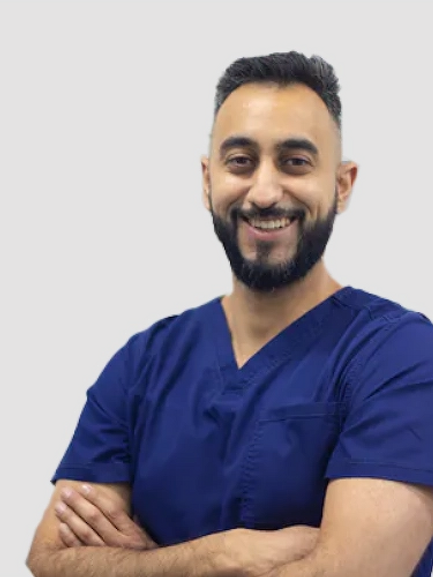
The surgical team is what makes the difference on the day. The clinics’ five surgeons are all GMC-registered, with a minimum of 1,000 FUE hair transplant procedures each to their name. Between them the team handles complex cases, including Afro-textured and women’s hair transplants, hairline design and lowering, and revision work.



Manchester clinic
• Dr Khawaja Masood Munir — GMC 6122581.
8+ years’ experience, 1,400+ hair transplant surgeries.
• Dr Haider Gillani — GMC 8030796.
1,000+ procedures, with specific expertise in complex cases requiring detailed anatomical understanding.
London (Harrow) clinic
• Dr Mahdi Alosert — GMC 6168297.
20+ years’ clinical experience. Specialist in Afro-Caribbean hair and hairline lowering.
• Dr Shuaib Mir — GMC 7567898.
1,200+ hair transplant cases. BAAPS plastic surgery and RCS anatomy training.
• Dr Zakar Rafiq — GMC 6164032.
MBBS and BSc (Hons) from Imperial College London. Associate Member of the International Society of Hair Restoration Surgery (ISHRS).
You can meet the surgeon who will perform your procedure at your free consultation.