
Hair Transplants for Bedford Patients with My Hair UK
The cost of a hair transplant for Bedford patients starts with a tailored plan for a permanent, natural-looking FUE result. We know that hair loss is about more than appearance, especially if you’re managing male pattern baldness, thinning hair, or a receding hairline.
Whether you’re based in Kempston, Goldington, Putnoe or Brickhill, book a free consultation in clinic or by video call with our trichology team to receive a tailored treatment plan with a personalised quote to help restore your hair.
Why Choose A Hair Transplant?
For many patients, a hair transplant is the first lasting solution they’ve found, and it’s the only medical procedure that delivers permanent regrowth in balding or thinned areas. It works by moving healthy follicles from the back and sides of the scalp, where hair is genetically resistant to thinning, into the areas that need coverage. Once the transplanted follicles settle in, they keep growing for the rest of your life.
The Cost of a Hair Transplant in Bedford
For Bedford patients, hair transplant costs run from £2,499 to £4,899 and are 5☆ all-inclusive, with GMC-registered surgeons at CQC-registered clinics and no surprises on surgery day. What you pay reflects your graft count, agreed after a surgeon reviews your case. The factors below set out the main considerations.
Our prices are the same at every My Hair UK clinic. See the how much a hair transplant costs in the UK for prices by graft count, cost per graft and exactly what is included.
Patchy beard growth as well as thinning hair? We also arrange beard transplants for Bedford patients at a single fixed price of £2,899, whatever the graft count.
How Much Does a Hair Transplant Cost in Bedford?
A hair transplant is widely quoted at £2,500 to £12,000 by clinics across the UK. At My Hair UK the price is fixed, from £2,499 for 500 grafts to £4,899 for 3,500 grafts, and it is the same for Bedford patients as everywhere else in the UK, because we price by graft count rather than by city. The table below sets both side by side.
| Grafts | My Hair UK Price | Widely quoted locally | Typical case |
|---|---|---|---|
| 500 grafts | £2,499 | £3,000 to £3,500 | Minor temple points or a hairline touch-up |
| 1,000 grafts | £2,899 | £4,000 to £4,500 | Temple recession or a small crown patch |
| 1,500 grafts | £3,299 | £4,500 to £5,000 | An early receding hairline and temples |
| 2,000 grafts | £3,699 | £5,500 to £6,000 | Midsized hairline and temple restoration |
| 2,500 grafts | £4,099 | £6,000 to £6,500 | Comprehensive hairline plus mid-scalp |
| 3,000 grafts | £4,499 | £6,500 to £7,000 | Extensive frontal and mid-scalp |
| 3,500 grafts | £4,899 | Rarely offered in one session | Our maximum in a single session |
| 4,000 grafts | £7,398 total | £9,500 to £10,000 | Extensive loss, planned across two sessions |
| 5,000 grafts | £8,198 total | £11,000 to £12,000 | Advanced loss, front and crown, two sessions |
| 6,000 grafts | £8,998 total | £12,000 or more | Our largest planned restoration, two sessions |
Comparison figures are published prices from clinics operating in the UK, collected August 2026. They are shown for context and are not our quotes. Our price includes the consultation, the surgeon-led procedure, post-operative medication, your aftercare kit and in-person follow-up, with nothing added on the day.
Rows up to 3,500 grafts are a single session, and 3,500 is our maximum in one sitting. Anything above that is planned as two sessions at least six months apart to protect the donor area, so the prices shown for 4,000 grafts and above are the combined total for both.
Our Results Speak For Themselves¹
See more of our Hair Transplant Before And After Results
Factors Affecting Hair Transplant Costs
Number of Grafts Needed
The number of grafts you need is what determines the cost. Our packages run from 500 to 3,500 grafts, but most patients sit in the 1,500–3,000 range. A mid-level hairline restoration back to the central vertex may be 2,000–2,500 grafts; more significant hair loss might need 3,500+ grafts or surgery split across two sessions. More grafts mean a longer surgical day and a higher tier package.
Extent of Hair Loss
Your graft count is driven by where you sit on the Norwood scale, the standard clinical grading for male pattern baldness. Early recession at the temples requires far fewer grafts than a Norwood VI with widespread crown loss. Consultation includes a donor-area density assessment to confirm how many grafts can realistically be harvested. This is a check some clinics skip.
Hair Type and Texture
The team has experience with all hair types and textures. Coarser hair gives better hair transplant coverage per graft than fine hair, so a patient with thick hair may need fewer grafts for the same visual density. Afro-textured and curly hair require surgeons with specific experience, as follicle shape and curl angle affect extraction technique. We’ll discuss this at consultation.
Surgeon Expertise
The surgeon at the table is what shapes the result. Each of the clinic’s surgeons is GMC-registered and has personally performed more than 1,000 FUE hair transplant procedures. Individual surgeon experience is what matters here, not team totals. Natural-looking results come from surgeon skill, not machines. How the hairline is designed, the angle each follicle sits at, and how the donor area is preserved all matter more than equipment. That’s why the surgeons position each graft by hand rather than using automated systems.
How Many Grafts Will I Need?
Graft count is what sets your price, and it follows your stage of hair loss on the Norwood scale. These are guide figures; your own number is confirmed at a free in-person consultation with the surgeon who would carry out your procedure.
| Norwood stage | Typical pattern | Grafts usually needed | Typical cost with My Hair UK |
|---|---|---|---|
| Stage 1 | Slight recession, no visible thinning | Often none; up to 1,000 if suitable | Monitoring or medication first |
| Stage 2 | Temple recession, mature hairline | 1,000 to 1,500 | £2,899 to £3,299 |
| Stage 3 | Deeper recession at the temples | 2,000 to 2,500 | £3,699 to £4,099 |
| Stage 3 vertex | Recession plus thinning at the crown | 2,500 to 3,500 | £4,099 to £4,899 |
| Stage 4 | Significant frontal loss, larger crown | 3,000 to 4,000 | £4,499 to £4,899, may need two |
| Stage 5 | Front and crown grow, band narrows | 4,000 to 5,000, often two sessions | £4,899 to £8,198 |
| Stage 6 | One large area of loss | 5,000 to 6,000, two sessions | £8,198 to £8,998 in total |
| Stage 7 | Only a horseshoe at back and sides | Demand exceeds donor supply | Usually not suitable |
The honest constraint behind these figures is your donor area, which can typically supply 6,000 to 7,000 grafts across a lifetime. That is why we cap a single session at 3,500 grafts, and why advanced loss cannot always be fully restored. For every session size, cost per graft and a full breakdown of what is included, see our UK hair transplant cost guide.

What to Expect at Your Consultation
Your hair transplant consultation is free and there is no obligation to book. It takes around 45 minutes and gives you the information you need to decide in your own time. Here’s what happens:
Medical history
We take a brief medical history: current medications, previous surgeries, conditions that affect healing, and whether you’ve already spoken to your GP about hair loss.
Scalp assessment
A specialist examines your scalp under magnification, grades your hair loss on the Norwood scale (for men) or Ludwig scale (for women), and checks the density of your donor area.
Goal discussion & plan
We talk through what you want a transplant to achieve. You’ll get a graft count estimate and a tier price based on the clinical assessment. There are no surprise add-ons on surgery day.
Meet the surgeon
You can meet the GMC-registered surgeon who would perform your procedure. They answer technical questions directly.
No pressure to decide
You’ll leave with a tailored treatment plan, a personalised quote, and time to think it over. Most patients take a few weeks before booking.


Why Choose My Hair UK
The UK has no shortage of hair transplant clinics. Here’s what separates My Hair UK from the rest:
• Regulated UK medical care. GMC-registered surgeons, CQC-registered clinics. Every surgeon appears on the GMC register and is personally accountable for the work they do.
• Clear, all-inclusive pricing. The tier package you’re placed in covers the hair transplant consultation, surgery and aftercare. No hidden costs, and nothing extra appears on surgery day.
• You meet your surgeon before surgery. Unlike many Turkey clinics (and a number of UK providers), you’ll know who is operating on you at consultation, and you’ll see the same surgeon again on the day.
• Specialist experience with Afro-textured and women’s hair. Follicle shape and curl angle change the extraction technique. The clinics’ surgeons have specific experience in Afro-Caribbean hair transplants and women’s hair transplants.
• Straightforward travel from Bedford. Bedford to Manchester is around 2 hours 45 minutes via London St Pancras and Euston; London is around 40 minutes on Thameslink to London St Pancras, then the Underground to Kenton. See the Travel section below for details.

The gold standard of hair transplants, minimally invasive, no scarring and fantastic results
Our pioneering method can thicken hair and bring forward hairlines

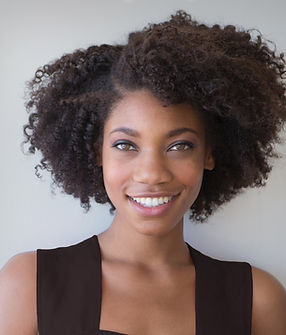
We have highly skilled surgeons who specialise in Afro Caribbean hair types

Thickening and reshaping your beard can redefine the lines of your face

An especially skilled procedure that can reshape and fill out thin or over plucked eyebrows

Alternative Treatments
Our extensive range of non-surgical treatments that can boost hair growth and reduce thinning
Recovery and Results Timeline
Recovery is mostly straightforward, with detailed aftercare guidance from the team to lean on at each stage. It’s faster than older hair transplant techniques, though the final result still takes time. A summary is below:


• First 24 hours after: Expect mild swelling and tightness.
• Week 1: The donor and recipient areas scab naturally. No scratching, no heavy lifting.
• Weeks 2–3: Transplanted hair sheds. This is normal. The follicle stays in place while the shaft falls out before it regrows.
• Month 3: New growth emerges from the transplanted follicles.
• Month 6: Visible thickening.
• Months 9–12: Full density and final result.
More detail on each phase, including washing routines, sleeping advice, exercise limits and medication, lives in our detailed recovery guide.
What's Included In The Price?
All-inclusive at My Hair UK means one price covers the whole journey, from first consultation through to your final follow-up, with nothing extra added on the day. Your tier package takes in every stage of treatment, and there is no consultation fee. Here’s what that price covers:
• Initial consultation: a specialist assesses your hair loss, takes your medical history and builds a treatment plan tailored to you
• FUE hair transplant: the procedure itself, covering local anaesthetic, how the donor area is preserved and follicle placement
• Post-operative aftercare: written recovery instructions, scheduled follow-ups and a direct line to the clinic for anything that comes up during recovery
• Named GMC-registered surgeon: you’ll know in advance exactly who is performing your procedure
The Benefits of FUE Hair Transplants
• No linear scar. FUE leaves tiny individual marks in the donor area that heal quickly and aren’t visible under normal-length hair. FUT (strip surgery) leaves a visible line across the back of the head.
• Faster recovery. There are no stitches and no sutures to come out. Desk-based work is usually fine within a week.
• Precision for hairlines. Placing follicles individually lets surgeons replicate the natural single-hair density at the front hairline. Strip surgery struggles to match this consistently.
• Suitable for shorter hairstyles. With no linear scar, FUE patients can wear their hair short without exposing a scar line.
For technical depth, see our complete FUE guide.
The Surgical Team
The surgical team is what makes the difference on the day. The clinics’ five surgeons are all GMC-registered, with a minimum of 1,000 FUE hair transplant procedures each to their name. Between them the team handles complex cases, including Afro-textured and women’s hair transplants, hairline design and lowering, and revision work.


Manchester Clinic
Dr Masood Munir - GMC: 6122581
8+ years’ direct hair transplant experience, 1,400+ hair transplant surgeries. Beard and Afro hair specialist.
Dr Haider Gillani - GMC: 8030796
1,000+ procedures, with specific expertise in complex cases requiring detailed anatomical understanding.
London (Harrow) clinic
Dr Mahdi Alosert - GMC: 6168297
20+ years’ clinical experience. Specialist in Afro-Caribbean hair and hairline lowering.
Dr Shuaib Mir - GMC: 7567898
1,200+ hair transplant cases. BAAPS plastic surgery and RCS anatomy training, Beard and Afro hair specialist.
Dr Zakar Rafiq - GMC: 6164032
MBBS and BSc (Hons) from Imperial College London. Associate Member of the International Society of Hair Restoration Surgery (ISHRS).
You can meet the surgeon who will perform your procedure at your free consultation.
The Hair Transplant Procedure for Bedford Patients
The FUE hair transplant is performed under local anaesthetic. You’ll be awake, but you won’t feel the extraction or placement. Individual follicles are taken from the back and sides of the scalp, where hair is genetically resistant to thinning, and placed into areas where hair has thinned or receded.
The process:
1. Consultation: your hair loss is assessed in person, your goals are discussed, and a graft count and treatment plan are agreed. You’ll meet the surgeon who will perform your procedure.
2. Preparation: on surgery day, you’re settled in. The donor area is trimmed and local anaesthetic is administered. The procedure is comfortable, though you should expect a full day at the clinic.
3. Extraction and placement: follicles are extracted one at a time and placed into the recipient area at matching angles and densities. The number of grafts determines the surgical time, typically 5 to 8 hours.
4. Recovery: recovery is supported by detailed aftercare instructions before you leave. Most patients can return to desk-based work within a week, with more physical work back on the table after 2 weeks. Full results develop over 9 to 12 months. See the Recovery and Results Timeline section below for detail.
Clinic Locations and Travel From Bedford
For Bedford residents our nearest surgical clinic is in Harrow: around 40 minutes on Thameslink to London St Pancras from Bedford station, then a short Underground hop to Harrow. The Manchester clinic is also CQC-registered and available if that fits your diary better.
So if you live in Putnoe, Biddenham, Brickhill or Goldington, then leave behind the scenic views of Priory Country Park and the Great Ouse and book a free consultation with our Trichology team either in-person or via video call to begin your hair restoration journey.
From Bedford to My Hair UK London (Harrow) Clinic
By Train
If you’re travelling by train, take a direct service from Bedford to London St Pancras. The journey takes around 40 minutes on Thameslink to London St Pancras, plus around 30 minutes on the Underground to Kenton. From St Pancras, walk five minutes to Euston (they are next door), then take the Bakerloo line northbound directly to Kenton. The clinic is a 5-minute walk from Kenton.
By Car
To get to the Harrow clinic by car, leave Bedford on the A6 south, then the M1 southbound. Take the M1 south to J6A, then the M25 anti-clockwise to J19 and pick up the A41. Exit at J4 and follow the A41 towards Harrow, then continue on the A409 until you reach Kenton Lane. Follow this road until you arrive at the Harrow clinic. The journey takes around 1 hour 30 minutes, depending on traffic.
From Bedford to My Hair UK Manchester Clinic
By Train
If you’re travelling by train, take a direct service from Bedford to Manchester Piccadilly. The journey takes around 2 hours 45 minutes (changing at London Euston). Once you arrive at Manchester Piccadilly, it’s just a 5-minute walk to the clinic: head west along Piccadilly, continue onto Mosley Street and Princess Street, then turn onto Deansgate and follow the road until you reach the clinic.
By Car
To get to the clinic by car, leave Bedford via the A421 west to the M1. Take the M1 north to Catthorpe, then the M6 to Manchester. Follow the M62 towards Manchester, then merge onto the M602 into Salford. Continue along Regent Road, then turn onto Deansgate and head into the city centre where there are plenty of multi-storey car parks nearby. The clinic is located on Deansgate. The journey takes around 3 hours, depending on traffic.
Local GPs
Before your consultation, speak to your GP. Some health conditions can affect whether a hair transplant is suitable for you. It's important to get medical clearance first. For your convenience, here are some local GP practices you might consider speaking with before your consultation:
Address: 85 Goldington Ave, Bedford MK40 3DB
Address: 84-86 London Rd, Bedford MK42 0NT
Address: 13 Linden Rd, Bedford MK40 2DQ
Frequently Asked Questions (FAQs)
1. What’s the price of a hair transplant in Bedford?
Hair transplant costs for Bedford patients are 5☆ all-inclusive and run from £2,499 to £4,899, with GMC-registered surgeons at CQC-registered clinics and no hidden extras. What you pay reflects the number of grafts needed, agreed after a surgeon reviews your case.
2. Does a hair transplant hurt?
No. FUE is performed under local anaesthetic. You’ll be awake but you won’t feel the extraction or placement. Most patients describe the day as long but comfortable. See our do hair transplants hurt, guide for the detail.
3. When will I see results?
The transplanted hair sheds at week 2 to 3. This is normal and expected. New growth starts around month 3, thickening is visible by 6 months, and the full result comes through at 9 to 12 months.
4. How soon can I return to work and exercise?
Most patients return to desk-based work within a week. Exercise and gym should be avoided for 2 weeks. Contact sports should be avoided for longer. We’ll give you a specific timeline during your post-op briefing.
5. How many grafts will I need?
Our packages cover 500 to 3,500 grafts, though most patients fall in the 1,500–3,000 range. A small crown patch or temple recession might be 800-1,200 grafts. Restoring a full front hairline can need 3,000+ grafts. A specialist will confirm your graft count at consultation by grading your hair loss on the Norwood scale.
6. How long does the procedure take?
Surgery itself usually runs 5 to 8 hours, depending on graft count. Plan on being at the clinic for the full day, with preparation, surgery and post-procedure briefing all included.
7. Is the result permanent?
Yes. The donor hair from the back and sides of the scalp is genetically resistant to thinning, so once those follicles are transplanted they keep growing for life. See our how long do hair transplants last for a fuller breakdown.
8. Is an unshaven hair transplant possible?
Yes, for smaller cases. An unshaven or partially shaven FUE works where the donor area can be reached without fully shaving the head. It adds time and isn’t right for every case. The surgeon decides at consultation. More detail in our hair transplant without shaving.
9. What age can I have a hair transplant?
The minimum legal age for a hair transplant in the UK is 18. However, strong consideration should be given for patients in their late teens and early-to-mid 20s, as hair loss may not yet be stable. Younger patients can face a higher chance of needing further surgery later in life as their hair loss progresses. More detail in our how old should you be?
10. Do you do Afro-textured hair transplants?
Yes. Afro-textured and curly hair calls for a surgeon with specific experience. Follicle shape and curl angle change the extraction technique. The surgical team handles these cases regularly, and we can walk through the detail at consultation.
11. Is scarring visible after a hair transplant?
No linear scar. The small extraction marks heal and aren’t visible under short haircuts. It’s a key reason the clinics only run FUE and not FUT strip surgery.
12. What preparation is needed before a consultation?
Very little. A list of current medications, any conditions that affect healing and, ideally, a prior GP conversation about your hair loss. Bring questions. You aren’t expected to book on the day.
Related Articles:
Hair Transplant In Northampton